
 Mail Us : service@zgsscr.com
 Call Us: +86 18039889808
Mail Us : service@zgsscr.comCall Us: +86 18039889808


Rising electricity costs — averaging 8–15% annual increases across Europe, Australia, and North America — have made home solar battery storage one of the fastest-growing investments for homeowners worldwide. But a new dilemma has emerged: should you buy an all-in-one solar battery system (battery + inverter + energy management in a single unit), or build a system from separate components?
This guide breaks down the pros, cons, and costs of both approaches — helping you decide which integrated energy storage solution fits your home, budget, and energy goals.
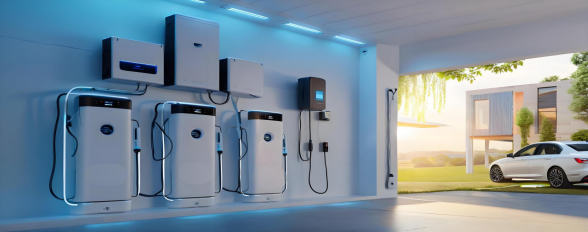
An all-in-one (also called "integrated" or "combo") solar battery system combines three core components into a single, pre-configured unit:
Battery storage — LiFePO4 battery cells that store solar energy or off-peak grid electricity
Hybrid inverter — Converts DC battery power to AC household power, and manages solar input, grid connection, and battery charging all from one device
Energy Management System (EMS) — Software that optimizes when to charge, discharge, and draw from the grid based on time-of-use rates, solar generation, and consumption patterns
Key benefits of the all-in-one design:
- One compact enclosure — takes up less wall space than separate units
- Factory-tested compatibility — no risk of mismatched components
- Single warranty and support contact
- Simplified installation — fewer devices, fewer cables, less configuration
- Typically lower total installed cost
For homeowners wanting the simplest path to energy savings, an all-in-one solar power system delivers the most straightforward upgrade path from grid-only to solar-ready.
All-in-One System
- Best for: Most homeowners, first-time solar buyers, space-limited installations
- Components: 1 unit (battery + inverter + EMS integrated)
- Installation: 1–2 hours by one electrician
- Warranty: Single 10-year warranty
- Scalability: Stackable — add more battery modules
- Matching risk: Zero — factory-integrated
- Typical cost (10kW): $4,000–$7,000
- Monitoring: Built-in app, one dashboard
Separate Components
- Best for: DIY enthusiasts, system expanders, custom requirements
- Components: 2–3 separate units (battery, inverter, EMS)
- Installation: 3–5 hours, may need two specialists
- Warranty: Separate warranties per component
- Scalability: Highly flexible — replace/upgrade any component
- Matching risk: Medium — must verify voltage, communication protocol, and capacity compatibility
- Typical cost (10kW): $4,500–$8,000 (higher due to engineering)
- Monitoring: May need separate apps or integration setup
Verdict: For 80% of homeowners, an all-in-one system delivers the best value — lower cost, simpler installation, and guaranteed compatibility. Separate components only make sense for those with existing equipment they want to retain, or very specific capacity/configuration requirements.
5 kW / 5–10 kWh System — Small Homes and Light Backup
- Best for: Apartments, 1–2 bedroom homes, daily usage under 15 kWh
- What it powers: Refrigerator (8–12 hrs), lights, fans, phones, WiFi
- What it won't power: Air conditioning, water heater, heavy appliances
- Solar pairing: 3–5 kW solar panels
- Ideal for: Urban homes with stable grids, first-time solar buyers
10 kW / 10–15 kWh System — Standard Family Home (Most Popular)
- Best for: 3–4 bedroom homes, daily usage 15–30 kWh
- What it powers: Refrigerator (15–24 hrs), split AC (5–8 hrs), washing machine, lights, TV, internet
- Solar pairing: 5–8 kW solar panels
- Ideal for: Families with existing solar, areas with frequent outages
- Typical savings: Covers 80% of evening peak demand, cuts bills by 60–70%
15 kW / 15–30 kWh System — Large Home / Near Off-Grid
- Best for: 4–6 bedroom homes, daily usage 30–50+ kWh
- What it powers: Central AC or 2–3 split ACs, full appliances, pool pump, EV trickle charging
- Solar pairing: 8–12 kW solar panels
- Ideal for: Off-grid properties, high-consumption households, farms, guest houses
Quick sizing rule: Your battery capacity (kWh) should be roughly equal to your daily kWh consumption × 1.3. For example, 20 kWh/day × 1.3 = 26 kWh — a 15 kWh all-in-one with expansion capability.
A quality home solar battery system in the 10–15 kWh range covers the vast majority of family homes while keeping costs manageable.
Battery Chemistry — LiFePO4 Only
- Cycle life: 3,000–6,000 cycles (10–15 years)
- Safety: Thermal runaway threshold >270°C — safest lithium chemistry
- Efficiency: 95–98% round-trip
- Look for: Automotive-grade prismatic cells, not cylindrical
Inverter Quality
- Pure sine wave output (mandatory for sensitive electronics)
- Surge capability: 2× rated power for 5–10 seconds
- Efficiency: ≥93% at full load
- Hybrid capability: Seamless grid-tie, off-grid, and backup modes
Energy Management Features
- Time-of-use scheduling: Automatically charge during cheap hours, discharge during peak
- Solar self-consumption optimization: Prioritize using your own solar power
- Backup mode: Automatic switchover in under 20ms during grid failure
- App monitoring: Real-time consumption, generation, and battery status
Expandability
- Can additional battery modules be added?
- Maximum supported capacity (10–30 kWh typical)
- Parallel connection: Can multiple units be linked?
For homes with complex solar setups, pairing an all-in-one system with a quality hybrid inverter ensures seamless integration with existing or future solar arrays.
Installation steps for an all-in-one system:
1. Wall mount the unit (requires concrete or brick wall rated for 40–80 kg)
2. Connect AC input from the grid and/or solar panels
3. Connect AC output to the home's consumer unit
4. Configure EMS settings via the mobile app
5. Commission and test — typically complete in under 2 hours
Key installation requirements:
- Clearance: 300 mm above and below for ventilation
- Conduit: Proper cable routing for AC and DC lines
- Earthing/grounding: Must comply with local electrical code
- Certifications: CE, RoHS, UN38.3, IEC 62619
Maintenance:
- Minimal — LiFePO4 batteries require no active maintenance
- Annual check: Verify ventilation is clear, check cable connections, review app data for anomalies
- Firmware updates: Keep BMS and inverter firmware current via the app
5 kW / 5–10 kWh:
- Equipment: $1,500–$2,500 | Installation: $300–$800
- Annual savings: $400–$800 | Payback: 4–6 years
10 kW / 10–15 kWh:
- Equipment: $3,000–$5,000 | Installation: $500–$1,200
- Annual savings: $800–$1,600 | Payback: 4–7 years
15 kW / 15–30 kWh:
- Equipment: $4,500–$7,000 | Installation: $800–$1,500
- Annual savings: $1,200–$2,400 | Payback: 5–8 years
ROI factors:
- Time-of-use arbitrage: Charge at $0.08/kWh off-peak, use instead of $0.30/kWh peak
- Solar self-consumption: Use 80%+ of your solar generation vs 30–50% without storage
- Backup value: Avoid food spoilage, business interruption, and inconvenience during outages
- Battery lifespan: LiFePO4 lasts 10–15 years, outlasting the inverter it's paired with
Q: What's the difference between an all-in-one system and a separate battery + inverter?
A: An all-in-one integrates the battery, inverter, and energy management into a single unit — simpler installation, guaranteed compatibility, and usually lower cost. Separate components allow you to mix and match brands or reuse existing equipment, but require careful compatibility verification.
Q: Can I add solar panels later if I buy an all-in-one system now?
A: Yes — most all-in-one systems with hybrid inverters are "solar-ready." You simply connect the solar panels to the unit's PV input when you're ready.
Q: How long does an all-in-one home battery system last?
A: Quality LiFePO4 all-in-one systems deliver 3,000–6,000 charge cycles — equal to 10–15 years of daily use. Most manufacturers offer a 10-year warranty.
Q: Is an all-in-one system safe to install indoors?
A: Yes. LiFePO4 chemistry is the safest lithium battery technology available, with no thermal runaway risk under normal conditions.
Q: What size all-in-one system do I need for a 3-bedroom home?
A: For a typical 3-bedroom home with moderate energy use (15–25 kWh/day), a 10 kW / 10–15 kWh all-in-one system paired with 5–7 kW of solar panels is the recommended configuration.
Q: Can I take my all-in-one system with me if I move?
A: Yes — all-in-one systems can be dismounted and re-installed at a new property. It's a transferable asset that adds value to your home.
All-in-one solar battery systems represent the most accessible, cost-effective path to residential energy independence. By integrating battery storage, inversion, and intelligent energy management into a single unit, they eliminate compatibility headaches, reduce installation complexity, and deliver faster payback than separate component systems.
For most homeowners — whether you're starting with solar for the first time or upgrading from an existing system — an all-in-one solution in the 10–15 kWh range strikes the optimal balance of cost, capacity, and capability.
Glory Zenith's range of all-in-one solar battery systems combines automotive-grade LiFePO4 cells, high-efficiency hybrid inverters, and intelligent EMS in compact, wall-mounted enclosures — certified to CE, RoHS, and IEC 62619 standards for worry-free home energy storage.
Ready to simplify your home energy? 📩 Get a Quote →
 Email: service@zgsscr.com
 Tel: +86 18039889808
 Get Our Newsletter!
 IPv6 Network Supported
| Blog | Sitemap
| XML
| Privacy Policy
IPv6 Network Supported
| Blog | Sitemap
| XML
| Privacy Policy
 Get A Quote