Apr 03, 2025
As residential electricity prices continue to rise across Europe, Australia, and North America — with annual increases of 8–15% in many markets — homeowners are increasingly turning to home battery storage as a solution. Wall-mounted LiFePO4 home batteries have emerged as the preferred choice for residential energy storage, offering a compact, safe, and cost-effective way to store solar energy and reduce grid dependence.
This comprehensive guide covers everything homeowners, installers, and distributors need to know about wall-mounted residential battery systems.
What Is a Wall-Mounted Home Battery?
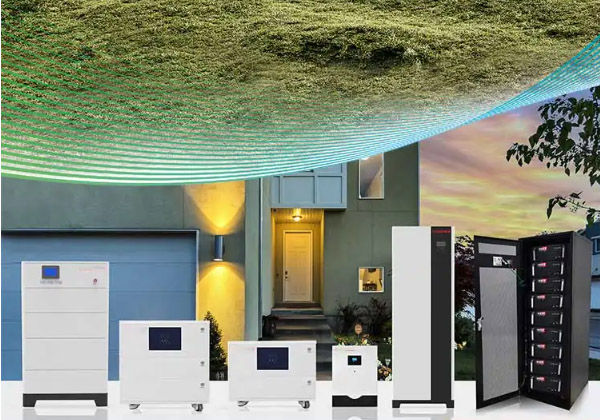
A wall-mounted home battery is a residential energy storage system designed to be installed on a wall, typically in a garage, utility room, or exterior wall. Unlike floor-standing or rack-mounted battery systems used in commercial settings, wall-mounted units are optimized for home use:
Key characteristics of wall-mounted home batteries:- Compact footprint — typically 600–900mm wide, weighing 40–80 kg (2–5 kWh per unit)- Slim profile — designed to sit flush against walls, taking minimal floor space- Scalable — multiple units can be stacked or paralleled for higher capacity- Aesthetic design — clean, modern appearance suitable for home environments- Integrated BMS — built-in battery management for safety and longevity
For homeowners seeking a wall-mounted LiFePO4 home battery solution, wall-mounted systems offer the best balance of space efficiency and energy capacity.
Why LiFePO4 Is the Standard for Home Energy Storage
Lithium Iron Phosphate (LiFePO4) chemistry has become the dominant technology in residential energy storage — and for good reason:
Safety first- Thermal runaway threshold above 270°C — significantly higher than NMC (210°C)- No cobalt content — eliminates the risk of thermal runaway from internal short circuits- Non-toxic chemistry — safe for installation in occupied living spaces- No gas venting during normal operation
Long service life- 3,000–6,000 charge cycles at 80% depth of discharge (DoD)- Equivalent to 10–15 years of daily cycling- 10-year warranty standard from reputable manufacturers
Performance characteristics- Consistent voltage output throughout discharge cycle- High charge/discharge efficiency: 95–98%- Wide operating temperature: -20°C to 60°C- Low self-discharge rate: 2–3% per month
Sizing Your Home Battery: How Much Capacity Do You Need?
Choosing the right battery capacity depends on your household's energy consumption and solar generation pattern.
5 kWh System — Small households or backup-only- Best for: Apartments, small homes (1–2 bedrooms), essential backup loads- Typical daily usage: 5–8 kWh- Can power: Refrigerator, lighting, WiFi router, phone charging for 8–12 hours during outage- Solar pairing: Ideal with 3–4 kW solar system
10 kWh System — Standard family home- Best for: Average homes (3–4 bedrooms) with moderate energy use- Typical daily usage: 10–15 kWh- Can power: Full home essentials — fridge, lights, TV, computers, washing machine during outage- Solar pairing: Ideal with 5–7 kW solar system- Peak shaving: Covers 60–80% of evening peak demand
15–20 kWh System — Large homes or high self-sufficiency- Best for: Large homes (5+ bedrooms), high-consumption households, near off-grid operation- Typical daily usage: 20–30 kWh- Can power: Full home operation including HVAC, electric water heating during outages- Solar pairing: Ideal with 8–10 kW solar system- Self-sufficiency: Can achieve 80–90% grid independence with proper solar sizing
Sizing formula:Recommended capacity (kWh) = Daily household consumption (kWh) × 1.3 ÷ DoD factor
Example: A home using 15 kWh/day with an 80% DoD battery:15 × 1.3 ÷ 0.8 = 24.3 kWh → Choose a 15–20 kWh system with expansion capability
Key Features to Look for in a Wall-Mounted Home Battery
Battery Management System (BMS)- Real-time monitoring of cell voltage, temperature, and current- Automatic cell balancing for consistent performance across all cells- Over-voltage, under-voltage, over-current, and over-temperature protection- Communication: CAN bus or RS485 for inverter integration
Depth of Discharge (DoD)- Look for ≥90% usable capacity- Higher DoD means more usable energy per cycle- LiFePO4 supports deeper discharge than lead-acid without damage
Round-Trip Efficiency (RTE)- Industry standard: ≥95% for quality LiFePO4 systems- Higher RTE means less energy lost during charge/discharge cycles
Scalability- Can multiple units be connected in parallel?- Maximum parallel units supported (typically 4–16 units)- Expandable without replacing existing units
Warranty and Support- Standard: 10-year warranty for reputable manufacturers- Performance guarantee: ≥70% capacity retention after 10 years- Local technical support and spare parts availability
Installation Considerations
Mounting requirements- Wall material: Must support 40–80 kg per unit (concrete or brick wall recommended)- Clearance: Minimum 300mm clearance above and below for ventilation- Environment: Indoor installation preferred (garage, utility room, basement)- Outdoor: IP65-rated units available for exterior wall mounting
Electrical requirements- AC coupling: Connects to existing solar inverter (most common retrofit)- DC coupling: Direct connection to hybrid inverter (higher efficiency for new installs)- Single-phase or three-phase: Ensure compatibility with home electrical system
Regulatory compliance- CE, RoHS, UN38.3, IEC 62619 certifications- Local electrical code compliance- Grid connection approval (if selling back to grid)
Cost Analysis and ROI
5 kWh system:- Equipment: $1,500–$2,500- Installation: $300–$800- Estimated annual savings: $400–$800- Payback period: 4–6 years
10 kWh system:- Equipment: $3,000–$5,000- Installation: $500–$1,200- Estimated annual savings: $800–$1,600- Payback period: 4–7 years
15 kWh system:- Equipment: $4,500–$7,000- Installation: $800–$1,500- Estimated annual savings: $1,200–$2,400- Payback period: 5–8 years
ROI factors to consider:- Time-of-use (TOU) rate arbitrage: Charge when cheap, use when expensive- Solar self-consumption: Use your own solar power instead of selling it cheap and buying back expensive- Feed-in tariff avoidance: Avoid selling excess solar at low rates and buying back at retail rates- Backup value: Avoided losses during power outages (typically 1–3 outages per year in many regions)- Battery lifespan: LiFePO4 lasts 10–15 years, potentially spanning two inverters
Comparison: Wall-Mounted vs Other Home Battery Form Factors
Wall-Mounted Battery- Space: Minimal floor footprint, vertical installation- Capacity per unit: 2–5 kWh (stackable)- Best for: Homes with limited floor space, garage or utility room installation- Aesthetics: Designed for home environments, clean appearance
Stackable/Floor-Standing Battery- Space: Requires floor space, 0.3–0.6 m² per unit- Capacity per unit: 5–15 kWh per tower- Best for: Homes with dedicated utility space, higher capacity needs- Aesthetics: Industrial appearance, best kept out of sight
Rack-Mounted Battery- Space: Requires 19-inch rack cabinet, substantial floor space- Capacity per unit: 3–5 kWh per module, 20–100 kWh per rack- Best for: Commercial applications, very high capacity home systems- Aesthetics: Data-center appearance, utility room only
For most residential applications, a wall-mounted LiFePO4 home battery provides the best combination of space efficiency, capacity, and cost.
FAQ
Q: How long does a wall-mounted home battery last?A: Quality LiFePO4 batteries deliver 3,000–6,000 cycles — equivalent to 10–15 years of daily use with 80% depth of discharge. Most manufacturers offer a 10-year warranty.
Q: Can I install a home battery myself?A: Wall-mounted batteries should be installed by a qualified electrician. They require proper wall mounting, electrical connection, and integration with your existing electrical system.
Q: Do I need solar panels to use a home battery?A: No. While home batteries are most cost-effective when paired with solar, they can also be charged from the grid during off-peak hours and used during peak hours to save on time-of-use electricity rates.
Q: How much does a home battery save on electricity bills?A: Typical savings range from $400–$2,400 per year depending on system size, local electricity rates, solar generation, and usage patterns. Most systems pay for themselves within 4–8 years.
Q: Are home batteries safe?A: Yes. LiFePO4 batteries are the safest lithium battery chemistry available, with no thermal runaway risk, no toxic materials, and built-in BMS protection. They are safe for indoor installation.
Q: Can I expand my battery system later?A: Most wall-mounted systems support parallel expansion. You can start with one unit and add more as your needs grow, as long as all units are the same model and voltage.
Conclusion
Wall-mounted LiFePO4 home batteries represent the smartest investment in residential energy storage today. Their compact design, exceptional safety profile, long cycle life, and declining costs make them accessible to a growing number of homeowners worldwide.
Whether you're looking to reduce your electricity bills, achieve energy independence, or ensure backup power during outages, Glory Zenith's wall-mounted LiFePO4 home battery systems offer reliable, scalable, and certified solutions for homes of all sizes.
Ready to take control of your home energy? 📩 Get a Quote →
Read More

 Mail Us : service@zgsscr.com
 Call Us: +86 18039889808


 Email: service@zgsscr.com
 Tel: +86 18039889808
 Get Our Newsletter!
 IPv6 Network Supported
| Blog | Sitemap
| XML
| Privacy Policy
IPv6 Network Supported
| Blog | Sitemap
| XML
| Privacy Policy
 Get A Quote