Aug 08, 2025
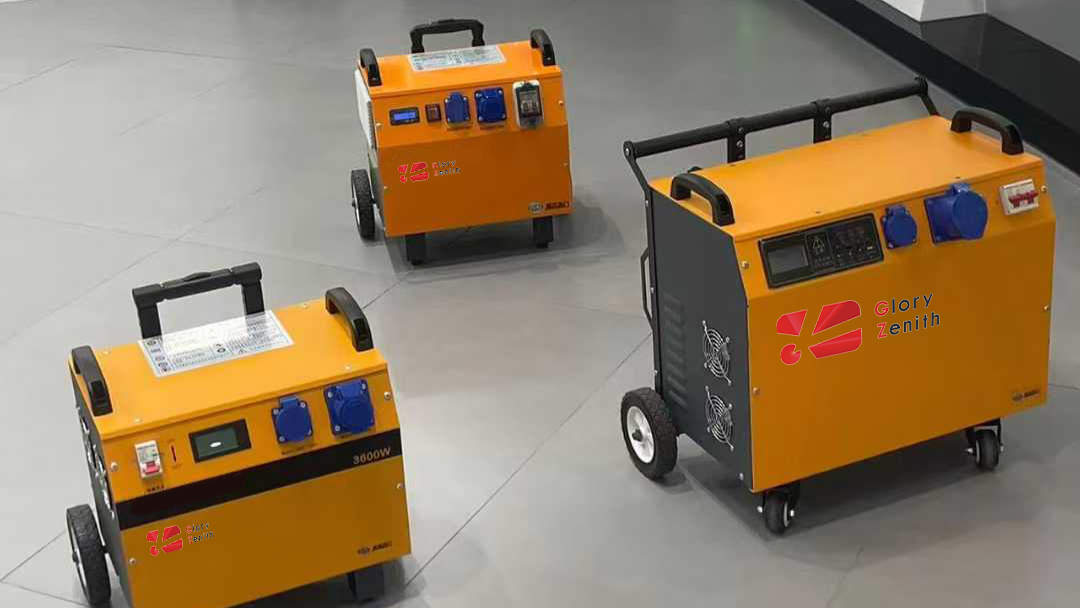
In modern industry, field operations place higher demands on a stable and reliable power supply. Whether at construction sites, during emergency rescue operations, mining operations, or as temporary power support for large-scale events, 5000W Industrial Portable Power Station play a vital role. Their high power, portability, and environmental adaptability provide flexible power solutions for a variety of complex scenarios, significantly improving work efficiency and safety.
1. What is an Industrial Mobile Power Supplies?
Industrial mobile power supplies generally refer to portable power devices that integrate a high-capacity battery pack, inverter/rectifier, control unit, protection circuitry, and corresponding output interfaces. They feature independent power output, enabling them to directly power equipment in environments without a fixed power grid or serve as a backup power source during power outages. Common types include:
High-capacity lithium-ion power banks (commonly used as a workhorse in field operations)
Fuel/hybrid power banks (optional for extreme environments or extended periods of use)
Solar/hybrid power banks (for use in remote areas or when green energy is needed)
II. Core Features and Technical Highlights
High Power Output and Stability
200w Portable Power Station can provide continuous output ranging from tens to hundreds of kilowatts, meeting the needs of a variety of loads such as power tools, lighting systems, and air conditioning equipment. Design considerations such as output waveform, voltage stability, and short-circuit protection directly impact on-site safety and efficiency.
Large Capacity and Fast Charge and Discharge
High-density battery packs (such as lithium iron phosphate) provide long-term operation and fast charging capabilities, reducing downtime. For equipment that requires continuous operation, fast charging and discharging means higher work rate and output.
Portability and Durability
One Stop Energy Storage System Factory typically feature rugged housings, high levels of protection, and vibration and shock resistance, making them suitable for use in harsh environments such as construction sites, mining areas, and offshore platforms.
Multiple protection mechanisms
Over/undervoltage protection, overcurrent protection, short-circuit protection, temperature monitoring, and overheating protection ensure safe operation even in extreme conditions, protecting connected equipment and personnel.
Intelligent and Remote Monitoring
Many devices feature embedded control systems and communication capabilities such as CAN/Modbus/IoT access, enabling real-time monitoring of power status, temperature, load, and other data, and enabling remote management and maintenance via apps or the cloud.
Environmental Adaptability
Suitable for extreme field environments such as high and low temperatures, humidity, and dust. Select models feature IP protection, waterproof and dustproof properties, and salt spray corrosion resistance, meeting the needs of specialized applications such as offshore and mining.
III. Typical Application Scenarios
Construction and Building Sites: Powering construction machinery, lighting, and temporary office areas, ensuring nighttime operations and stable operation of critical equipment.
Emergency Rescue and Disaster Recovery: Providing emergency power in areas without power, supporting rescue communications equipment, lighting, water pumps, and other equipment.
Mining, energy, and offshore platforms: Where there is no fixed power grid or the power supply is unstable, mobile power supplies have become a key power source. Events and Performances: Ensure reliable power for outdoor events, exhibitions, and temporary stage lighting and sound systems.
Agriculture and Fieldwork: Provide continuous power in fields, greenhouses, and other locations off the grid.
IV. Key Points for Purchasing and Deployment
Power Requirements Assessment: Determine the total power and peak demands of the equipment to be powered, and select a power bank capable of covering the maximum load.
Energy Structure and Range: Consider whether pure electric, hybrid, or solar expansion is required. Evaluate on-site charging time and the availability of alternative energy sources.
Output Interfaces and Compatibility: Ensure the equipment has sufficient output interfaces (AC, DC, welding machine-specific interfaces, etc.), as well as appropriate plugs and cable accessories.
Durability and Environmental Rating: Select the appropriate protection level and material grade based on site conditions such as temperature, humidity, and dust.
Safety and Compliance: Focus on overload protection, short-circuit protection, leakage protection, and compliance with local electrical safety regulations.
Maintenance and Service: Consider battery life, maintenance intervals, spare parts availability, and manufacturer-provided remote diagnostics and on-site maintenance services. V. Future Trends and Challenges
Energy Diversification and Greening: More models will integrate solar charging, wind power adaptation, and efficient energy management systems, reducing reliance on fossil fuels.
Longer Service Life and Lower Total Cost of Ownership (TCO): New materials and battery technologies will improve cycle life, while optimized designs will reduce O&M costs.
Intelligent Operations and Data-Driven Management: Cloud-based monitoring, predictive maintenance, and remote upgrades will become industry standards, helping companies achieve higher O&M efficiency.
Regulatory Compliance and Improved Safety: With the diversification of industrial scenarios, relevant safety standards and certification systems will become more stringent, necessitating proactive planning for compliance.
Read More

 Mail Us : service@zgsscr.com
 Call Us: +86 18039889808



 Email: service@zgsscr.com
 Tel: +86 18039889808
 Get Our Newsletter!
 IPv6 Network Supported
| Blog | Sitemap
| XML
| Privacy Policy
IPv6 Network Supported
| Blog | Sitemap
| XML
| Privacy Policy
 Get A Quote